What is the Seed System Lab?
Seeds are entangled in the ecological, social, cultural and economic fabric of our lives. Seeds underpin food security and play a fundamental role in efforts to make food systems more sustainable. At the same time, seeds are 'big business'. Tension between the ecological, socio-cultural and economic aspects of seed is at the heart of 'seed struggles' around the world.
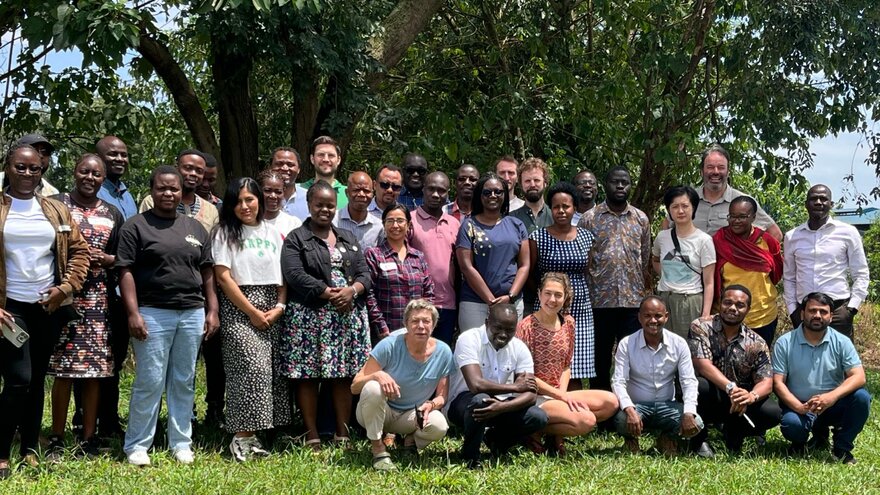
The Seed System Lab is a multi- and interdisciplinary research group at NMBU's Department of International Environment and Development Studies (Noragric) working on themes related to crop diversity, seed system development and seed security.
What is crop diversity, seed systems and seed security?
Crop diversity is the diversity of species and varieties of cultivated plants that has co-evolved and spread within and between farming communities around the world. Seed systems are understood as the actors, activities, and institutions involved in the maintenance of crop diversity, plant breeding and selection, seed production and dissemination. In short, they are the systems that make seed available to farmers. In theory, a well-functioning seed system will ensure seed security for all farmers, i.e., that “men and women within the household have sufficient access to adequate quantities of good quality seed and planting materials of preferred crop varieties at all times in both good and bad cropping seasons” (FAO 2016)
In the article Navigating toward resilient and inclusive seed systems, we outline a perspective on seed systems which draws on many strands of research, from crop science to social science.
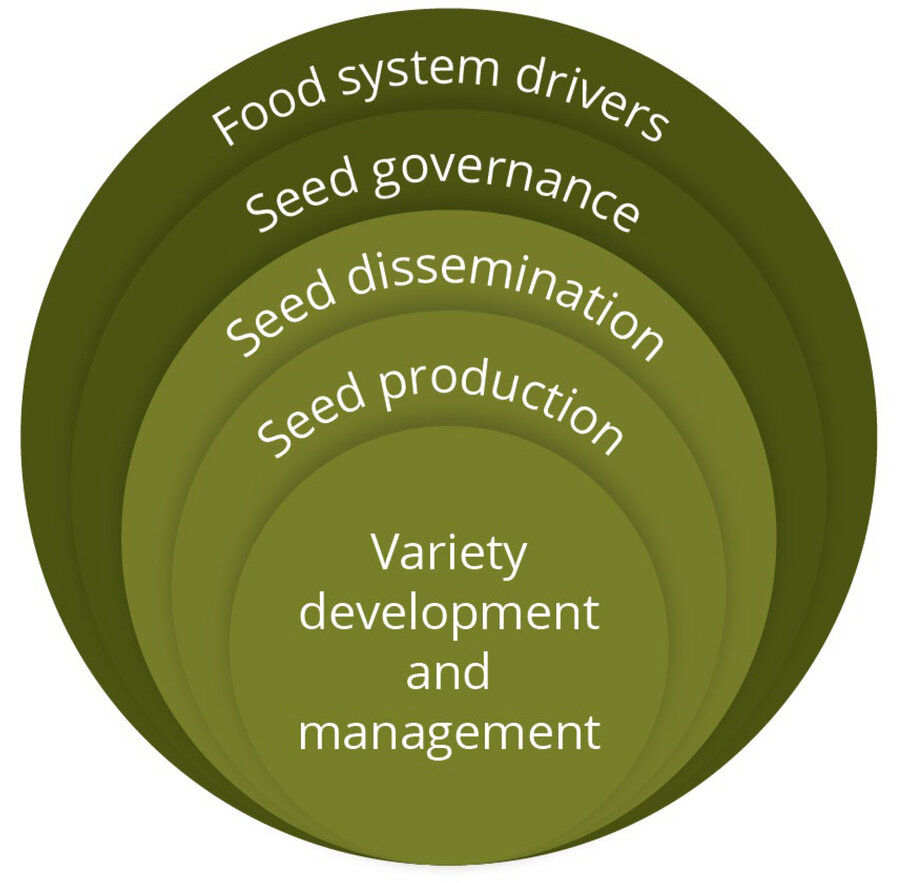
Figure 1. Conceptual framework identifying five factors to describe seed systems. The three in light green are basic "functions" that seed systems deliver. These are activities that seed system actors are engaged with. The two in dark green (seed governance and food system drivers) are broader contextual factors that influence how the seed system functions. Photo: NMBU What we do
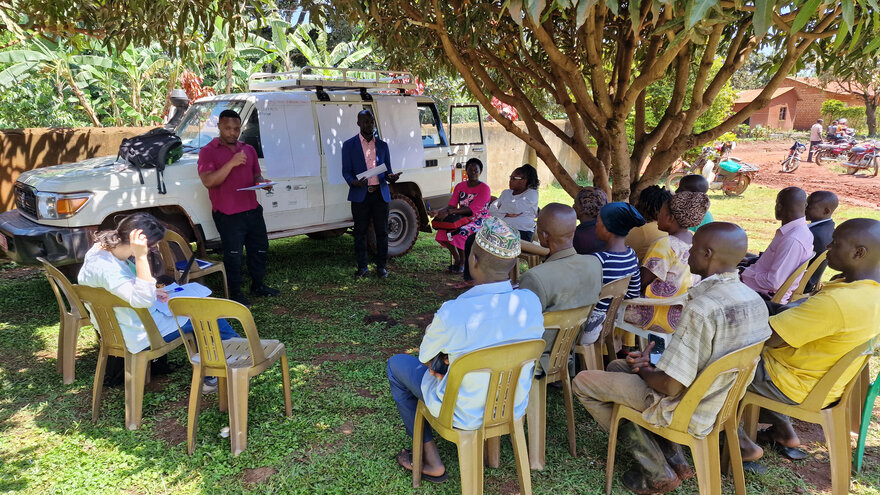
Testing the Seed System Toolkit in Uganda. Photo: Teshome Hunduma Mulesa Our objective is to deliver:
1) Cutting edge academic research
2) Analyses of high value for policy and practice
3) Education and knowledge for students and professionals in public and private organizations involved in seed system development
NMBU's Seed System Lab researches seed systems across geographical scales from the local to the national and global level.
We research the different functions of seed systems from conservation and development (and evolution) of varieties to seed production and dissemination. We research these functions in the context of the multi-layered governance regimes they are part of as well as in the broader food systems they are part of. We also do research on seed system outcomes in terms of seed security as well as ‘higher order’ outcomes such as food security and food system sustainability.
No single discipline can grasp seed systems in their entirety. In the Seed System Lab, we have members and associates with different disciplinary backgrounds; crop science, agroecology, ethnobotany, anthropology, political ecology, political economy, development studies and economics. We work with research partners from other fields and faculties at NMBU and at other universities. We engage in co-production of seed system knowledge and innovation with stakeholders outside academia, including farmer organizations, civil society organizations and public institutions in the seed systems.
The Seed System Lab welcomes new students and collaborations - we encourage those interested to contact us.
Projects / Initiatives
BOLD
Biodiversity for Opportunities, Livelihoods and Development (2021-2030)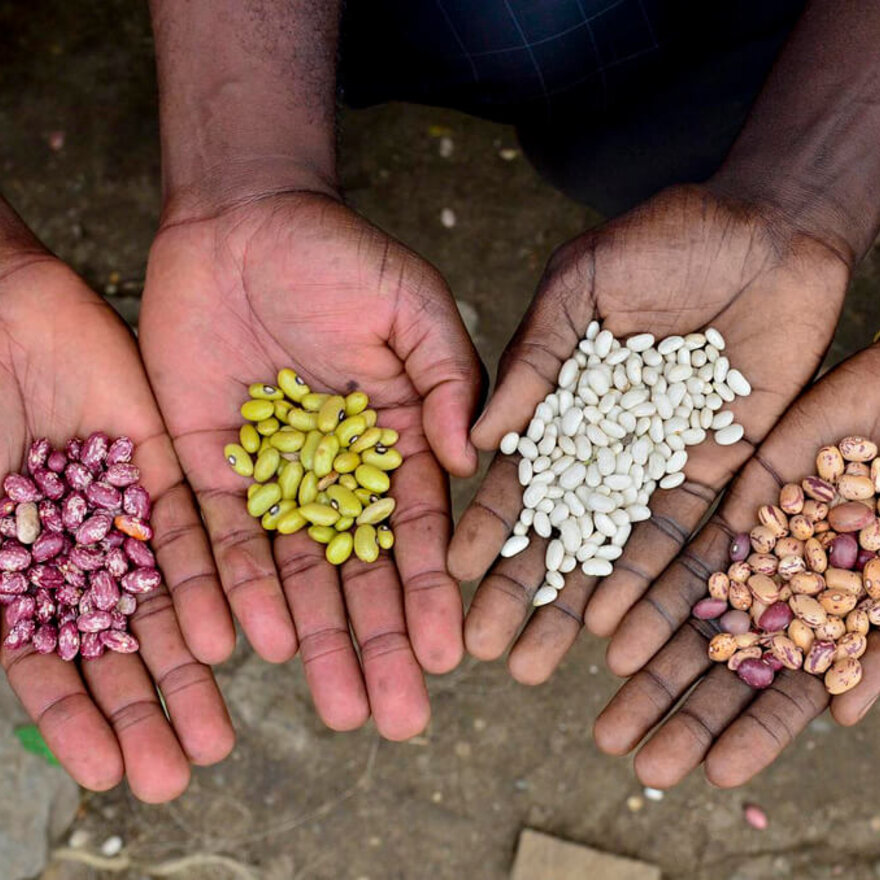
ACCESS
Access to seeds: From emergencies to seed system development (2019-2023)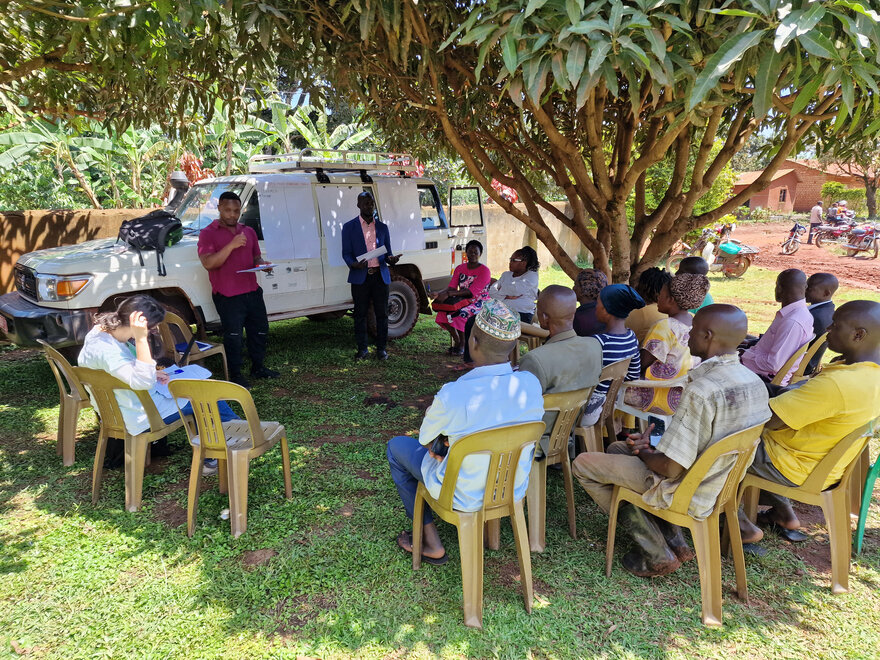
Seed System Toolkit
Tools for characterizing and analyzing seed systems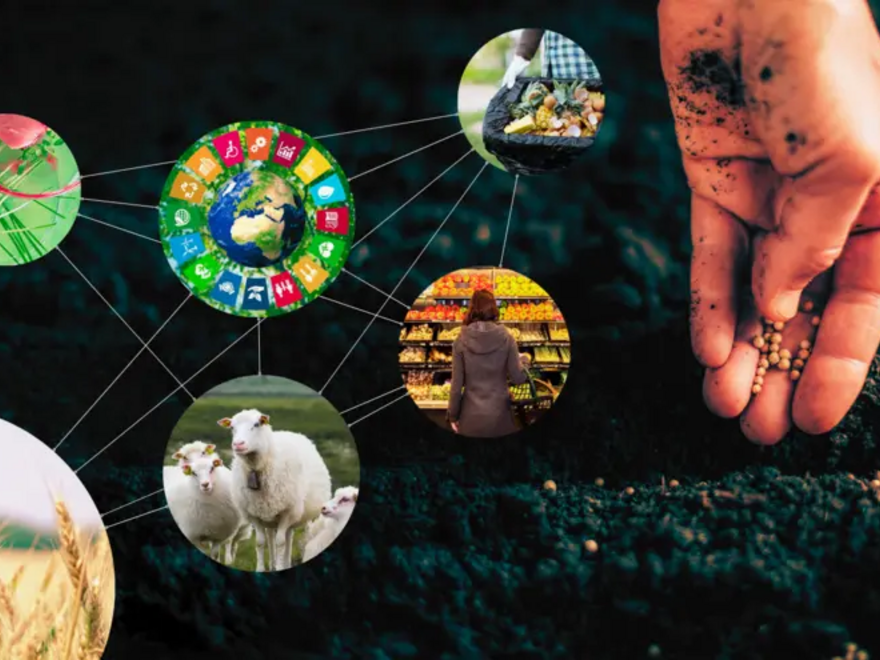
Sustainable Food Systems
The Seed System Lab is part of this NMBU cross-faculty Sustainability ArenaUpcoming Events
NorDev25: Solidarity, social justice and sustainability
The 8th Joint Nordic Development Research conference will be held at NMBU 24-26 September, 2025.
The Seed System Lab is organizing Panel 22: Plant diversity for sustainable food systems.
Courses
- Agroecology and Development EDS352
Runs every spring semester. - Governance of Plant Genetic Resources and Seeds: Laws, Policies and Practices EDS315 Runs in the June block - not every year.
- Seed Systems of Opportunity Crops and the Diversification of Food Systems
This is the 2025 edition of a series of postgraduate courses organized by the Virtual Seed Academy. Field course offered in Uganda, March 23-April 3, 2025, in collaboration with Wageningen University and Research, Makerere University and other partners.
- Agroecology and Development EDS352
Publications
2026
- Farmers as breeders and seed producers: Insights from 30 years of scaling up seed clubs in Vietnam; Nguyen, L.H., Dalle, S.P., Sharma, S., Kilian, B., Mulesa, T.H., Tin, H.Q., and Westengen, O.T.; Outlook on Agriculture; link
- Seeds and social norms: sorghum seed exchange among smallholder farmers in Northern Ethiopia; Wendmu, T.A., de Boer, H.J., Makate, C., and Westengen, O.; Ecology and Society. link
2025
- Contribution of community seed banks to farmer seed systems and food security in Northern and Central Malawi; Tione, G., Westengen, O.T., Holden, S.T., Katengeza, S.P. and Makate, C; Food Policy; link
- The dynamics of crop diversity and seed use in the context of recurrent climate shocks and poverty: Seasonal panel data evidence from rural Uganda; Makate, C., Angelsen, A., Holden, S.T., and Westengen O.T.; World Development Perspectives; link
- Three reasons why food system transformations are contested, and why food system scientists and policymakers should care; Westengen, O.T., Lecy, K.S., Angelsen, A., Aspholm, M.E., Bjugstad, N., Eriksen, S.H., Haug, R., Karlsson, C., Olsen, H.F., Rognli, O.A. and Schwarm, A; Frontiers in Sustainable Food Systems; link
- Seeding Diversity: Enhancing access to crop diversity through innovative seed system linkages in Tanzania; Otieno G, Mulesa, T.H., Dalle, S.P., Mohamed, M.D., Hamisy, W.C. and Westengen, O.T.; Research report; link
- Seed Systems in Bhutan: A report on the current status and potential pathways for seed system development; Tamang, A., Gyeltshen, W., Doji, R., Sherab, T., Thering, W., Mulesa, T.H., Dalle, S.P. and Westengen, O.T.; Research report; link
- The Sierra and the Coast: An Assessment of Seed Systems Used by Farmers in Two Regions of Ecuador; Dalle, S.P., Endara, D., Vaca, J.L., Carrera, H., Bonilla, A.L, Guaranda, U., Tixe, D.A., Tapia, C., Mulesa, T.H., and Westengen, O.T.; Research report; link
- Sembrando la diversidad: Conociendo los sistemas de semillas utilizados por los agricultores en el Ecuador; Dalle, S.P., Endara, D., Vaca, J.L., Carrera, H., Bonilla, A.L, Guaranda, U., Tixe, D.A., Tapia, C., Mulesa, T.H., and Westengen, O.T.; Research report; link
2024
- From the wild to the market: the trade of edible plants in Guinea-Bissau; Leite, A., Westengen, O.T., Catarino, L., Monteiro, E., Mango, S.P., Indjai, B. and Cuní-Sanchez, A.; Economic Botany; link
- Smallholder access to purchased seeds in the presence of pervasive market imperfections and rainfall shocks: panel data evidence from Malawi and Ethiopia; Makate, C., Angelsen, A., Holden, S.T., and Westengen, O.T. ; Agricultural and Food Economics; link
- Seeding diversity: enhancing farmers’ access to crop varieties and quality planting materials in Uganda’s seed systems; Mulesa, T.H., Otieno, G., Dalle, S.P., Mohamed, M.D., and Westengen, O.T; Research report; link
2023
- Navigating toward resilient and inclusive seed systems; Westengen, O.T., Dalle, S.P., and Mulesa, T.H.; Proceedings of the national academy of sciences. link.
- Seed systems development to navigate multiple expectations in Ethiopia, Malawi and Tanzania; Haug, R., Hella, J.P., Mulesa, T.H., Kakwera, M.N., and Westengen, O.T.; World Development Sustainability; link
- Evolution of farm-level crop diversification and response to rainfall shocks in smallholder farming: Evidence from Malawi and Tanzania; Makate, C., Angelsen, A., Holden, S.T. and Westengen O.T.; Ecological Economics; link
- People Gathered by Sorghum: Cultural Practices and Sorghum Diversity in Northern Ethiopia; Wendmu, T.A., Gebrelibanos, T.S., Kovi, M.R., Ring, K.H., de Boer, H.J., Abera, F.A., and Westengen, O.T.; Human Ecology; link
- Rainfall shocks and inequality have heterogeneous effects on farmers' seed purchase decisions in East Africa; Makate, C., Angelsen, A., Holden, S.T., and Westengen, O.T.; Climate Risk Management; link
2022
- Exchange and experimentation: community seed banks strengthen farmers’ seed systems in Northern Malawi; Vansant, E.C., Kerr, R.B., Sørensen, H., Phiri, I. and Westengen, O.T. International Journal of Agricultural Sustainability; link
- Maize variety preferences among smallholder farmers in Ethiopia: Implications for demand-led breeding and seed sector development; Marenya, P., Wanyama, R., Alemu,S., Westengen, O.T. & Jaleta M.; PLoS ONE; link
- Cultural Effects on Sorghum Varieties Grown, Traits Preferred, and Seed Management Practices in Northern Ethiopia; Wendmu, T.A., Cuni-Sanchez, A., Abebe, H.T., de Boer, H.J., Abera, F.A. & Westengen, O.T.; Economic Botany; link
- Crops in crises: Shocks shape smallholders' diversification in rural Ethiopia. World Development; Makate, C., Angelsen, A., Holden, S.T., and Westengen, O.T.; World Development; link
2021
- Politics of Seed in Ethiopia’s Agricultural Transformation: Pathways to Seed System Development; Mulesa, T.H.; Frontiers in Sustainable Food Systems; link
- Discriminatory effects of gender disparities in improved seed and fertilizer use at the plot-level in Malawi and Tanzania; Makate, C. and Mutenje, M; World Development Perspectives; link
- The imperial maize assemblage: maize dialectics in Malawi and India; Jakobsen, J. & Westengen, O.T.; Journal of Peasant Studies; link
- Pluralistic Seed System Development: A Path to Seed Security? ; Mulesa, T.H., Dalle, S.P., Makate, C., Haug, R. & Westengen, O.T.; Agronomy; link
2020
- Safeguarding a global seed heritage from Syria to Svalbard; Westengen, O.T., Lusty, C., Yazbek, M., Amri, A., and Asdal, Å.; Nature Plants; link
- Farmers and Plant Breeding – Current Approaches and Perspectives; Westengen, O.T. and Winge, T. (eds.) Routledge (Book); link
- Seed security in theory and practice: A comparative study of seed security frameworks and their use; Dalle, S.P. and Westengen, O.T.; Noragric Report; link
2019
- Governing seeds in East Africa in the face of climate change: Assessing political and social outcomes; Westengen, O.T., Haug, R., Guthiga, P., and Macharia, E.J.F.; Frontiers in Sustainable Food Systems; link
Lab members and partners
Core group
PhD candidates and Master's students
- Noel Templer, Department of International Environment and Development Studies (Noragric), NMBU and International Maize and Wheat Improvement Centre (CIMMYT) - PhD Candidate
- Grace Tione, Department of International Environment and Development Studies (Noragric), NMBU - PhD Candidate
- Jane Lakot, Department of International Environment and Development Studies (Noragric), NMBU - Master's student
- Eilif Rønning, Department of International Environment and Development Studies (Noragric), NMBU - Master's student
- Miluska Bravo Vela, Department of International Environment and Development Studies (Noragric), NMBU - Master's student
Alumni and former members
- Teshome Hunduma Mulesa, Norwegian Forum for Development and Environment (FORUM)
- Tsedal Asres Wendmu, Department of International Environment and Development Studies (Noragric), NMBU
- Tesfakiros Semere Gebrelibanos, Mekelle University, Ethiopia
- Ida Arf Tarjem - Postdoctoral Associate (Tufan Lab), School of Integrative Plant Science Plant Breeding and Genetics Section, Cornell University
- Mariana Garcia Medina, Wageningen University and Research International Maize and Wheat Improvement Centre (CIMMYT)
- Loi Huu Nguyen, Lecturer, FPT Polytechnic University, Can Tho, Vietnam
- Emelie Vansant, Postdoctoral researcher, University of Copenhagen
- Gabriel Graton Roman, PhD Fellow in Anthropology, Université Libre de Bruxelles
- Viviana Meixner Vásquez, Researcher, Fridtjof Nansen Institute
Collaborating institutions
- Alliance of Bioversity and CIAT – Uganda
- Plant Genetic Resources Centre – Uganda
- Makerere University Regional Centre for Crop Improvement – Uganda
- National Plant Genetic Resources Centre – Tanzania
- Sokoine University of Agriculture – Tanzania
- International Maize and Wheat Improvement Centre – Ethiopia
- University of Abomey-Calavi Genetics, Biotechnology and Seed Science Centre – Benin
- Comité Central de Mujeres de la UNORCAC – Ecuador
- Instituto Nacional de Investigaciones Agropecuarias – Ecuador
- National Biodiversity Centre – Bhutan
- Fridtjof Nansen Institute – Norway
- Crop Trust – Germany
The Seed System Lab welcomes new students and collaborations - we enourage those interested to contact us.
Email us