CSE_4
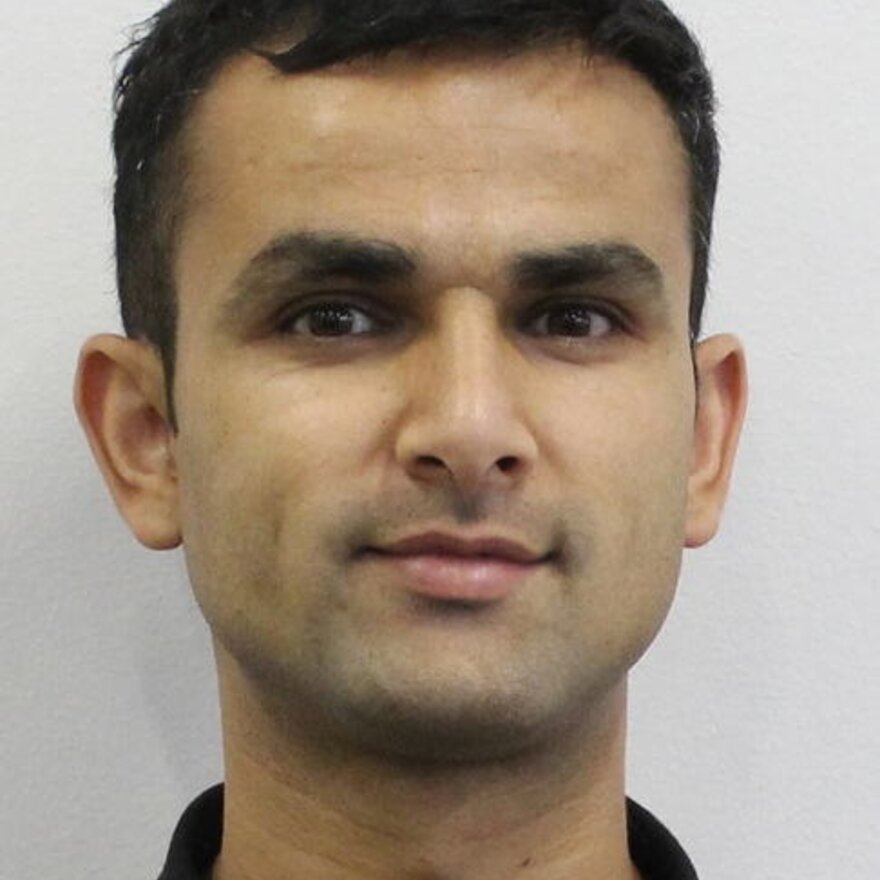
Photo: Haris Hameed Mian

The Computational Science and Engineering (CSE) Research Group at NMBU advances mathematical modeling, computational simulation, and artificial intelligence to address complex challenges in science and engineering.

Our research brings together computational science, applied mathematics, and mechanical engineering, with expertise in computational fluid dynamics (CFD), finite element methods (FEM), computational mechanics, multiphysics simulation, machine learning, and scientific computing. We develop and apply high-fidelity numerical methods, reduced-order models, and physics-informed AI to improve the prediction, design, and optimization of engineering systems.

Our research applications span renewable energy technologies, building physics, thermal and fluid systems, sustainable infrastructure, and advanced engineering technologies. Through international academic and industrial collaborations, we aim to translate fundamental computational research into innovative, efficient, and sustainable engineering solutions.

picture dr siddiqui

RESEARCH LEADERSHIP

Professor Muhammad Salman Siddiqui

Head of the Computational Science and Engineering Research Group

Professor Siddiqui leads interdisciplinary research combining computational fluid dynamics, advanced numerical simulation, artificial intelligence, and sustainable energy. His work advances predictive computational methods and fosters international collaborations to address complex engineering challenges.

View academic profile

  • Research Vision & Scientific Expertise

    Who we are

    An interdisciplinary research group advancing computational science and engineering through mathematical modeling, numerical simulation, and artificial intelligence.

    Our scientific expertise

    Advanced computational modeling and simulation, applied mathematics, computational fluid dynamics (CFD), finite element methods (FEM), computational mechanics, and AI/machine learning.

    Our research ambition

    To develop next-generation computational methods and intelligent simulation technologies that advance scientific understanding and enable sustainable solutions in renewable energy, building physics, and mechanical engineering.

  • Our Research Team

    Muhammad Sharjil

    Muhammad Sharjil

    PhD Student, Department of Engineering
    University of Agder

    otman-cse

    Otman Kouaissah

    Postdoc

    Rusith Chamara Hathurusinghe Dewage

    Rusith Chamara Hathurusinghe Dewage

    Industrial PhD

  • Associated Members

    nicoletta franchina

    Nicoletta Franchina Fixed term researcher at

    University of Bergamo, Italy

    Dr. Bernhard Stoevesandt

    Bernhard Stoevesandt

    Head of Department Aerodynamics, CFD and Stochastic Dynamics, Fraunhofer IWES

    Arvind Keprate

    Arvind Keprate

    Professor at OsloMet

    Liang Yang

    Liang Yang

    Lecturer in Marine Renewable Energy Systems, Cranfield University, UK

    Abdul Waheed Badar

    Abdul Waheed Badar

    Associate Professor at University of Bahrain

    My main field of research is data science and machine learning.

    Fadi Al Machot

    Associate Professor

    Habib Ullah

    Habib Ullah

    Associate Professor

    Taimoor Asim

    Taimoor Asim

    Associate Professor

    https://www.uia.no/om-uia/ansatte/faisala/

    Muhammad Faisal Aftab

    Associate Professor

    Muhammad Sharjil

    Muhammad Sharjil

    PhD Student

  • Research Areas

    • Computational Modeling & Numerical Simulation

      Our research advances mathematical modeling, numerical methods, and computational simulation for understanding and predicting complex physical and engineering systems. We develop and apply physics-based computational frameworks that integrate applied mathematics, numerical analysis, and scientific computing to investigate challenging problems across engineering disciplines.

      A central focus is the development and application of high-fidelity numerical methods, including finite element methods (FEM), finite volume methods (FVM), and computational approaches for coupled multiphysics problems. We investigate numerical accuracy, computational efficiency, model validation, and scalable simulation strategies for complex engineering applications.

      Our research also explores reduced-order modeling, computational optimization, and high-performance computing to enable efficient and reliable predictive simulations.

      Key research topics

      • Applied mathematics and numerical analysis
      • Finite element and finite volume methods
      • Multiphysics modeling and simulation
      • Scientific computing and numerical algorithms
      • High-fidelity and reduced-order simulations
      • High-performance computational methods

      Applications: Mechanical engineering, renewable energy technologies, building physics, thermal systems, and computational engineering.

      •

      Members

      Muhammad Salman Siddiqui

      Muhammad Salman Siddiqui

      Professor

      Haris Hameed Mian

      Stipendiat

      Muhammad Sharjil

      Muhammad Sharjil

      Stipendiat at UiA

      Dr. Bernhard Stoevesandt

      Bernhard Stoevesandt

      Head of Department at Fraunhofer Institute for Wind Energy Systems IWES

      nicoletta franchina

      Nicoletta Franchina

      Fixed-term university researcher at University of Bergamo, Italy

    • Computational Fluid Dynamics & Thermal Sciences

      Our research focuses on advanced computational fluid dynamics (CFD) and numerical simulation of fluid flow, turbulence, heat transfer, and coupled thermal-fluid phenomena. We develop and apply high-fidelity computational approaches to investigate complex flow physics and improve the prediction and performance of engineering systems.

      Research activities include turbulence modeling, aerodynamic analysis, fluid–structure interactions, and numerical investigation of coupled fluid and thermal processes. We employ computational methods to investigate flow behavior across different spatial and temporal scales, supporting both fundamental understanding and engineering design.

      We also explore the integration of CFD with reduced-order modeling, machine learning, and physics-informed computational methods to improve simulation efficiency, predictive accuracy, and engineering optimization.

      Key research topics

      • Computational fluid dynamics (CFD)
      • Turbulence modeling and flow physics
      • Aerodynamics and fluid–structure interactions
      • Computational heat transfer
      • Thermal-fluid and multiphysics simulations
      • CFD-based design and optimization

      Applications: Wind turbine aerodynamics, offshore renewable energy systems, building ventilation, thermal engineering, and industrial fluid systems.

      Members

      Muhammad Salman Siddiqui

      Muhammad Salman Siddiqui

      Professor

      Abdul Waheed Badar

      Abdul Waheed Badar

      Associate Professor at University of Bahrain

    • Artificial Intelligence & Scientific Machine Learning

      Our research explores the integration of artificial intelligence (AI), machine learning (ML), and physics-based computational modeling to advance scientific discovery and engineering simulation.

      We investigate data-driven and physics-informed computational methods that combine mathematical models, numerical simulations, and machine learning to improve predictive capabilities and computational efficiency. Particular areas of interest include physics-informed neural networks (PINNs), surrogate modeling, reduced-order models, and hybrid physics–AI simulation frameworks.

      Our research also addresses AI-assisted optimization, predictive modeling, and digital twin methodologies for complex engineering systems. By integrating physical knowledge with data-driven approaches, we aim to develop computational tools that support reliable prediction, efficient simulation, and intelligent engineering design.

      Key research topics

      • Physics-informed artificial intelligence
      • Scientific machine learning
      • Physics-informed neural networks (PINNs)
      • Reduced-order and surrogate modeling
      • Digital twins and predictive simulation
      • AI-assisted engineering optimization
      • Hybrid physics-based and data-driven modeling

      Applications: Renewable energy technologies, wind turbine performance prediction, building energy systems, intelligent agriculture, and mechanical engineering

      Members

      Muhammad Salman Siddiqui

      Muhammad Salman Siddiqui

      Professor

      Arvind Keprate

      Arvind Keprate

      Professor at OsloMet University

    • Sustainable Energy, Building Physics & Mechanical Engineering

      Our research advances computational modeling, numerical simulation, and AI-driven engineering approaches for the development of sustainable energy technologies, high-performance buildings, and advanced mechanical systems. We integrate computational science, applied mathematics, fluid mechanics, heat transfer, and computational mechanics to investigate complex physical phenomena and improve the performance, efficiency, and sustainability of engineering technologies.

      Wind Energy & Renewable Energy Technologies

      A major research focus is the computational analysis, design, and optimization of wind energy systems, particularly offshore wind turbines and innovative vertical-axis wind turbine configurations. We employ high-fidelity computational fluid dynamics (CFD), turbulence modeling, multiphysics simulation, and AI-enhanced predictive methods to investigate aerodynamic performance, wake interactions, and energy conversion. Our research also encompasses computational approaches to solar thermal technologies and renewable energy systems.

      Building Physics & Sustainable Built Environments

      Our research addresses building energy performance, heat and mass transfer, indoor airflow, thermal comfort, and energy-efficient building technologies. We explore physics-based modeling, computational fluid dynamics, building energy simulation, and AI-driven optimization to understand and improve the performance of buildings and controlled indoor environments. Applications include sustainable buildings, intelligent environmental control, and controlled environment agriculture.

      Mechanical Engineering & Advanced Engineering Systems

      We investigate the modeling, analysis, and optimization of mechanical and structural systems using numerical simulation, finite element methods (FEM), computational mechanics, and multiphysics approaches. Our research encompasses fluid–structure interactions, structural performance, mechanical system behavior, and simulation-based engineering design. We also explore the integration of artificial intelligence and computational optimization to support innovative and efficient engineering solutions.

      Cross-Cutting Computational Approaches

      Across these application areas, we combine high-fidelity simulation, reduced-order modeling, physics-informed machine learning, surrogate models, and digital twin methodologies to advance predictive capabilities and support intelligent engineering design.

      Key Research Topics

      • Offshore wind energy and advanced wind turbine technologies
      • Renewable energy systems and solar thermal engineering
      • Building physics, energy simulation, and sustainable buildings
      • Heat transfer, thermal-fluid systems, and indoor environments
      • Computational mechanics and mechanical engineering design
      • Finite element analysis and fluid–structure interaction
      • AI-enhanced engineering simulation and optimization
      • Intelligent environmental control and controlled environment agriculture

      Selected Research Projects

      • Intelligent CFD for Offshore Wind Energy (iCOWE)
      • Offshore Counter-Rotating Vertical-Axis Wind Turbine
      • Tilted Counter-Rotating Vertical-Axis Wind Turbine (TCR-VAWT)
      • Advancing Controlled Environment Agriculture Using Artificial Intelligence

      Key research topics

      • Wind energy and offshore renewable systems
      • Vertical-axis wind turbine technologies
      • Aerodynamic modeling and optimization
      • AI-enhanced renewable energy simulation
      • Solar thermal and energy conversion systems
      • Sustainable energy system modeling

      Selected research projects

      • Intelligent CFD for Offshore Wind Energy (iCOWE)
      • Offshore Counter-Rotating Vertical-Axis Wind Turbine
      • Tilted Counter-Rotating Vertical-Axis Wind Turbine (TCR-VAWT)

      Members

      Muhammad Salman Siddiqui

      Muhammad Salman Siddiqui

      Professor

      Haris Hameed Mian

      Stipendiat

      Taimoor Asim

      Taimoor Asim

      Associate Professor at Robert Gordon University, Aberdeen, UK

  • Research Funding & Achievements

    2025–2028 | Tilted Counter-Rotating Vertical-Axis Wind Turbine (TCR-VAWT)

    • Funding: NOK 2.8 million
    • Programme: Horizon Europe – Marie Skłodowska-Curie Actions
    • Research focus: Innovative floating wind turbine technologies, computational fluid dynamics, aerodynamic optimization, and mechanical engineering.
    • CSE leadership contribution: Research unit coordination and supervision.

    2024–2027 | Advancing Controlled Environment Agriculture Using Artificial Intelligence (AI-CEA)

    • Funding: NOK 4 million
    • Programme: Research Council of Norway – Industrial PhD Scheme
    • Research focus: Artificial intelligence, predictive modeling, intelligent environmental control, and sustainable agricultural technologies.
    • CSE leadership contribution: PhD co-supervision, research coordination, and scientific guidance.

    2024–2026 | Super-CO₂: Advanced Heat Exchanger Research

    • Funding: NOK 2.5 million
    • Programme: Horizon Europe – Marie Skłodowska-Curie Actions
    • Research focus: Thermohydraulic characterization of printed circuit heat exchangers operating in the pseudocritical region of supercritical CO₂ cycles.
    • CSE leadership contribution: Research unit coordination and supervision.

    2023–2027 | Intelligent CFD Methods for Offshore Wind Turbines

    • Funding: NOK 3 million, supporting a PhD position
    • Programme: NMBU
    • Research focus: Computational fluid dynamics, intelligent simulation, and offshore wind turbine aerodynamics.
    • CSE leadership contribution: Principal Investigator (PI) and project proposal development.

    Additional Research and Mobility Funding

    2024–2025 | North2North (N2N) Mobility Grant

    • Funding: NOK 150,000
    • Purpose: Supporting international student mobility and academic cooperation.
    • Contribution: Coordination of bilateral mobility activities.

    2022–2023 | NMBU Forskningløft Grant

    • Funding: NOK 150,000
    • Programme: NMBU institutional research funding.
    • Purpose: Supporting research development and academic activities.
  • Publications

    The CSE Research Group contributes to the advancement of computational science and engineering through peer-reviewed scientific publications in numerical modeling, computational fluid dynamics, artificial intelligence, and sustainable engineering technologies.

    Our research combines fundamental methodological developments with applications in renewable energy, mechanical engineering, and complex physical systems. We publish in international scientific journals and conferences and collaborate with academic and industrial partners to advance computational methods and engineering innovation.

    Publications by Muhammad Salman Siddiqui

    Publications by Haris Hameed Mian

    Publications by Otman Kouaissah

  • Ongoing PhD theses

    Our ongoing doctoral research addresses advanced challenges in computational modeling, numerical simulation, artificial intelligence, and sustainable engineering, contributing to scientific innovation and the development of the next generation of researchers.

    Haris Hameed Mian (2022-present) Intelligent CFD methods for floating wind turbines aerodynamics, NMBU

    William Hyden (2022-present) Semantic Encoder-Enhanced Representations for Generalized Zero-Shot, NMBU

    William

    William Hyden

    PhD Student

    Chandler Timm Cagmat Doloriel (2024-present) Machine learning-based novel methods for fish welfare in aquaculture, NMBU

    Chandler timm cagmat doloriel

    Chandler Timm Cagmat Doloriel

    PhD Student


    Muhammed Sharjil (2021-present) Intelligent control of offshore wind farms, UIA

    Muhammad Sharjil

    Muhammad Sharjil

    PhD Student, Department of Engineering
    University of Agder (UiA)

    Rusith Chamara Hathurusinghe Dewage, Insustrial PhD student in Data Science at REALTEK

    Rusith Chamara Hathurusinghe Dewage

    Rusith Chamara Hathurusinghe Dewage

    Advancing Controlled Environment Agriculture (CEA)

  • Master theses (completed)

    The Computational Science and Engineering (CSE) Research Group supports research-based master's education through projects integrating computational modeling, numerical simulation, artificial intelligence, and engineering applications.

    Our completed master's theses address scientific and technological challenges in computational fluid dynamics (CFD), applied mathematics, machine learning, renewable energy technologies, building physics, and mechanical engineering. These projects provide students with practical research experience in advanced computational methods and contribute to the group's broader scientific activities.

    Ammara Ansar — Review and State of the Art in Wake Analysis of Vertical-Axis Wind Turbines

    Olav Birkeland and Sigurd Flø Gustad — CFD Investigation of the Innovative Floating Tilted Vertical-Axis Turbine: Aerodynamic Performance, Wake Behaviour and Design Optimisation

    Bjørn Eirik Rognskog Nordbak and Eirik Skoglund (2025) Short-Term Wind Power Forecasting with TimeGPT using SCADA and Lidar Data from Anholt Offshore
    Wind Farm

    Elias Petterse (2024): Exploring Performance Variations in Counter-Rotating Vertical Axis Wind Turbine Pairs due to Scaling and Oblique Angles using 2D and 3D CFD

    Tuva Carey Selsaas (2024): Optimizing Subsea Operations Through Digital Twin Based Monitoring of Flexible Products

    Andrea Holm Jensen and Vincent Nordby Carmona (2023): Assessment of power enhancement in counter-rotating vertical-axis wind turbine pairs using CFD in 2D and 3D

    Tiril Malmedal (2023): A Supportive Framework for the Development of a Digital Twin for Wind Turbines Using Open-Source Software

    Lars Jørgen and Håkon Lunde (2022): Optimalisering av landbasert fiskeoppdrett ved hjelp av strømningssimulering

  • Contact us

    The Computational Science and Engineering (CSE) Research Group welcomes inquiries from academic researchers, industry partners, and prospective students interested in computational modeling, numerical simulation, artificial intelligence, and advanced engineering technologies.

    We are open to international research collaborations, joint funding proposals, industrial partnerships, and opportunities for PhD, postdoctoral, and master's research.

    Research Group Leader

    Professor Muhammad Salman Siddiqui
    Norwegian University of Life Sciences (NMBU)
    Faculty of Science and Technology
    Ås, Norway

    We offer projects for students in mechanical engineering, renewable energy technology, applied machine learning, data-driven approaches etc. Get in touch early !

    Potential topics for masters theses:

    • Turbulence in Multi-Rotor Wind Turbines: Atmospheric Interaction and Turbulence Analysis in Multi-Rotor Wind Turbines: A CFD Approach to Enhancing Power Generation Stability. Requires background in computational fluid dynamics, programming and mathematics.

    • Machine Learning Applications: Leveraging Operational Data from Offshore Wind Farm for Machine Learning Applications. Requires background in data science, machine learning applications.

    • Counter rotating VAWTs: Exploring the Aerodynamic Advantages and Performance Gains in Contra-Rotating Vertical Axis Wind Turbines Through Numerical Analysis. Requires background in computational fluid dynamics, programming and mathematics.

    • Aerodynamic Optimization: Optimizing Aerodynamic Performance in Horizontal Axis Wind Turbines: A Study on Blade Design and Energy Efficiency. Requires background in computational fluid dynamics, programming and mathematics.

    • Wind turbine wake and wind farm: Numerical Investigation of Wake Dynamics and Energy Loss in Horizontal Axis Wind Turbines: Insights for Improved Turbine Spacing and Farm Design. Requires background in computational fluid dynamics, programming and mathematics.

    Seeking PhD or Postdoc opportunities?

    All available positions are posted on the NMBU website, as well as on Jobbnorge and EURAXESS.

    NMBU hosts an annual 'Postdoc Masterclass' to assist in the preparation of applications for the Marie Skłodowska-Curie actions.

    Potential scientific collaborator, or just interested?

    Do not hesitate to get in touch!

    We are on the first floor of the Realtek building (TF fløy 1)

    Find us on our interactive map

  • Academic and industrial collaborations

    The CSE Research Group maintains an international network of academic, research, and industrial collaborators, bringing together expertise in computational science, numerical simulation, artificial intelligence, and engineering.

    These collaborations support joint scientific research, knowledge exchange, research publications, and the development of interdisciplinary initiatives in renewable energy, sustainable technologies, and advanced computational engineering.

    CSE Group Collaborators all
    CSE Group Collaborators all

News and updates

wintec

September 2026

Our group participated in the NAWEA/WindTech 2026 Conference in Portland, USA, where we presented our research, “Toward Meta-Learning-Inspired Adaptation of Motion-Conditioned Flow Surrogates for Moving-Boundary Flows.” The work investigates meta-learning-inspired approaches to enhance the adaptability of data-driven flow surrogates under varying motion conditions, highlighting their potential for efficient, accurate, and generalizable predictions in complex moving-boundary flow simulations.

ecms

June 2026

Our PhD student, Haris Hameed Mian, presented his research at the 40th ECMS International Conference on Modelling and Simulation 2026 in Grimstad, Norway, titled “Simulating Moving-Boundary Flows with Neural Surrogates: Latent Dynamics vs Operator Learning.” The work investigates neural surrogate modeling approaches, comparing latent dynamics and operator learning for efficient, data-driven simulation of unsteady moving-boundary flows, highlighting their potential for fast and accurate predictions in complex fluid dynamics and offshore wind energy applications.

TORQUE2026

June 2026

Our group participated in the TORQUE 2026 Conference in Bruges, Belgium, where we presented our research on short-term offshore wind power forecasting using SCADA and LiDAR measurements. The work explores the use of TimeGPT as a foundation model for offshore wind power prediction and highlights its potential for robust, scalable, and data-driven forecasting in offshore wind energy applications.

Atrium_

April 2026

Successfully organized the ATRIUM Project Workshop at REALTEK, focusing on advanced computational tools for aerodynamic assessment of Floating Offshore Wind Turbines. The workshop included updates on FOWT surrogate modeling, tilting VAWT concepts, multirotor VAWT wake analysis, and future research directions. We were pleased to welcome Bernhard Stoevesandt from Fraunhofer IWES, Germany, whose feedback and insights added great value to the discussions.

nicoletta franchina

February 2026

Guest Professor Nicoletta Franchina from the University of Bergamo, Italy, will spend two weeks with the CSE group in February 2026, delivering research seminars and training activities on renewable and wind energy.

dec2025-cse

December 2025

Professor Muhammad Salman Siddiqui visited the University of Tasmania, Hobart, Australia, under a research fellowship to foster international collaboration in science, engineering, and research.

nov2025-cse

November 2025

The CSE Research Group at NMBU welcomed Thor Valsø-Jørgensen, CTO of Forsprang Energy, for discussions on strengthening industry–academia collaboration in widn energy. The visit highlighted expertise in wind energy modeling, high-performance computing, and AI-driven engineering, exploring joint opportunities in advanced simulation and intelligent system development for next-generation wind energy solutions.

Oct2025-CSE

October 2025

The CSE group participated in a meeting and training session at Universidad Europea focused on CDIO-based educational frameworks.

otman-cse

September 2025

Otman Kouaissah has joined our group as a Postdoctoral Researcher.
He is working on an MSCA Postdoctoral Fellowship project focused on advancing floating offshore wind technology, a key pillar in the global transition to renewable energy. While most wind resources are located in deep-water regions where fixed-bottom turbines are not viable, floating platforms offer a pathway forward—provided they are both technically robust and economically scalable. His project introduces an innovative Tilted Counter-Rotating Vertical Axis Wind Turbine (TCR-VAWT), specifically designed to operate efficiently under the tilted conditions typical of spar-buoy floating platforms. By embracing, rather than resisting, these platform dynamics, the TCR-VAWT concept aims to deliver both aerodynamic and structural advantages, opening new possibilities for next-generation floating offshore wind systems.

Wake Conference

June 2025

Our PhD student, Haris Hameed Mian, presented two research papers at the recent Wake Conference 2025, held at Uppsala University’s Gotland Campus in Visby, Sweden. Both papers are now published in the IOP Journal of Physics: Conference Series. The first contribution, led by Haris Hameed Mian, explores how platform-induced motions (pitch and roll) impact wake recovery and turbulence in floating offshore wind turbines. The study demonstrates that roll motion can reduce wake deficits by up to 50%, and that increasing motion amplitude accelerates the onset of coherent flow structures—key insights for optimizing floating wind farm layouts. The second paper, led by Muhammad Salman Siddiqui, shows that geometric scaling significantly enhances power output (~21%) and improves wake behavior, supporting the design of more efficient and compact VAWT arrays.

Bjørn Eirik

Janunary 2025

Our master's student, Bjørn Eirik Rognskog Nordbak, participated in the ERRA DeepWind 2025 conference in Trondheim, where he presented our research group's work through two impactful poster presentations. The first poster focused on optimizing wind farm layouts using machine learning enhanced wake modeling. The second was on Leveraging data-driven techniques in LiDAR and SCADA data of a wind farm.

taimoor visit

November 2024

Associate professor Taimoor Asim from Robert Gordon University visited the CSE group to prepare joint research proposals for UKRI and Horizon Europe funding calls.

Haris Mid seminar

November 2024

A midway seminar for PhD candidate Haris Hameed Mian was successfully conducted, showcasing significant progress. The research, titled "Data-Driven CFD-Based Aerodynamic Prediction Analysis of Floating Offshore Wind Turbines," explores the influence of nonlinear dynamics on turbine performance and wake recovery. His work leverages advanced numerical simulations and data-driven modeling techniques to analyze wake dynamics, improve prediction accuracy, and optimize strategies for enhanced energy efficiency in floating offshore wind energy systems.

Salman_Norpart

October 2024

The CSE group leader met with Ghulam Ishaq Khan Institute (GIKI) Pakistan higher management to establish a strategic partnership aimed at promoting sustainability through the NORPRAT and Erasmus+ capacity-building projects.

Salman_visit

September 2024

The collaboration between Robert Gordon University (RGU) and NMBU's Computational Science and Engineering Group (CSE) has achieved a new milestone in Vertical Axis Wind Turbine (VAWT) design. During a recent visit to RGU’s Wind Tunnel Lab, joint experimental tests were conducted to enhance wind turbine designs by integrating experimental and computational methods. This partnership is paving the way for more efficient and sustainable wind energy solutions.

Advancing Controlled Environment Agriculture Using Artificial Intelligence

September 2024

The leader of CSE group, Muhammad Salman Siddiqui is part of a newly accepted Industrial Ph.D. project titled: "Advancing Controlled Environment Agriculture Using Artificial Intelligence“. This prestigious project, approved by the Norwegian Research Council, is a collaborative effort between RiftLabs, the Norwegian University of Life Sciences (NMBU).

Haris visit Fraunhofer

June 2024

Haris Hameed Mian (PhD student) successfully completed his research stay at Fraunhofer Institute for Wind Energy Systems (IWES), Oldenburg, Germany. During his tenure, he concentrated on advancing and refining floating offshore wind turbine modeling using OpenFOAM, contributing to the cutting-edge research in this critical area of renewable energy technology.

FLOW

April 2024

The CSE group has delivered a seminar on the topic of wind resource assessment for  FLOW: Flexible Learning for Offshore Wind program at UIA.  FLOW is a continuing education program at bachelor's level offered by the University of Agder, in collaboration with Equinor, GCE NODE and Windport. The program is financed by the Directorate for Higher Education and Skills (HK-dir).

CSE group visit Lakehead Canada

March 2024

The CSE group leader visited Lakehead University in Canada to develop a collaborative framework for future grant writing, focusing on student exchanges and joint research. Key areas of collaboration include renewable energy and northern climate challenges. This partnership aims to strengthen ties and secure funding for impactful research projects.

n2N

Jan 2024

The computational science and engineering research group has received N2N Mobility grant. The aim of the grant is to enhance the bilateral student mobility programs between NMBU, Canadian and  UK universities

Horizon Europe

April 2023

CSE group granted funding from Horizon Europe Marie Skłodowska-Curie Actions on the project Super-CO2: Evaluation of thermohydraulic characteristics of printed circuit heat exchangers in the pseudocritical region for supercritical CO2 cycle. The project will characterize the complex thermohydraulic behavior of CO2 in the pseudocritical region by employing a combination of experimental, numerical, and machine learning techniques.

Otman Kouaissah

Jan 2023

Otman Kouaissah from Università degli Studi di Bergam, Italy, visited CSE group as a guest researcher. His research was focused on detailed 3D CFD analysis of a straight-blade H-shaped VAWT operating in a tilted condition, typical for floating offshore platforms, focusing on performance and wake development. The findings highlight the significant impact of 3D flow effects, including strut-induced flow and finite blade effects, on the turbine's aerodynamics and energy production efficiency.

CSE_group

Dec 2022

Participated in the Forskningløft project, which aims to develop competence and strengthen collaborations across various departments to strengthen the integrated research environment. This initiative will also enhance our prospects for securing funding for top-tier research projects, including prestigious programs such as the EU's ERC and Marie Curie grants, as well as the Research Council's FriPro.

Wind turbine AI

Dec 2022

Started the PhD project: Intelligent CFD Methods for Offshore Wind Turbines; the project aims to conduct research and innovation in flow simulation in offshore wind turbines by combining high-fidelity computational fluid dynamics (CFD) models with machine learning (ML) models. The developed state-of-the-art models are expected to be integrated into future digital twin technology to fulfill the industrial needs of computationally efficient tools and form a basis for condition monitoring, prediction, analysis, and maintenance of offshore wind turbines. Key research areas that will be exploited in the Ph.D. research project will be physics-based and data-driven Reduced Order Models (ROM) to simulate and predict wind farm flows, especially in the wake region.

Realtek

Sep 2022

Oliver S. Carlo visited the CSE group from Italy, where he conducted an in-depth study on passive methods for improving air quality in urban canyons. His research focused on altering canyon geometry with porous obstacles, such as vegetation, and non-porous barriers to enhance pollutant dispersion, while also addressing the challenges in implementing these measures and contributing to the development of urban design guidelines for better air quality.

Research Projects